
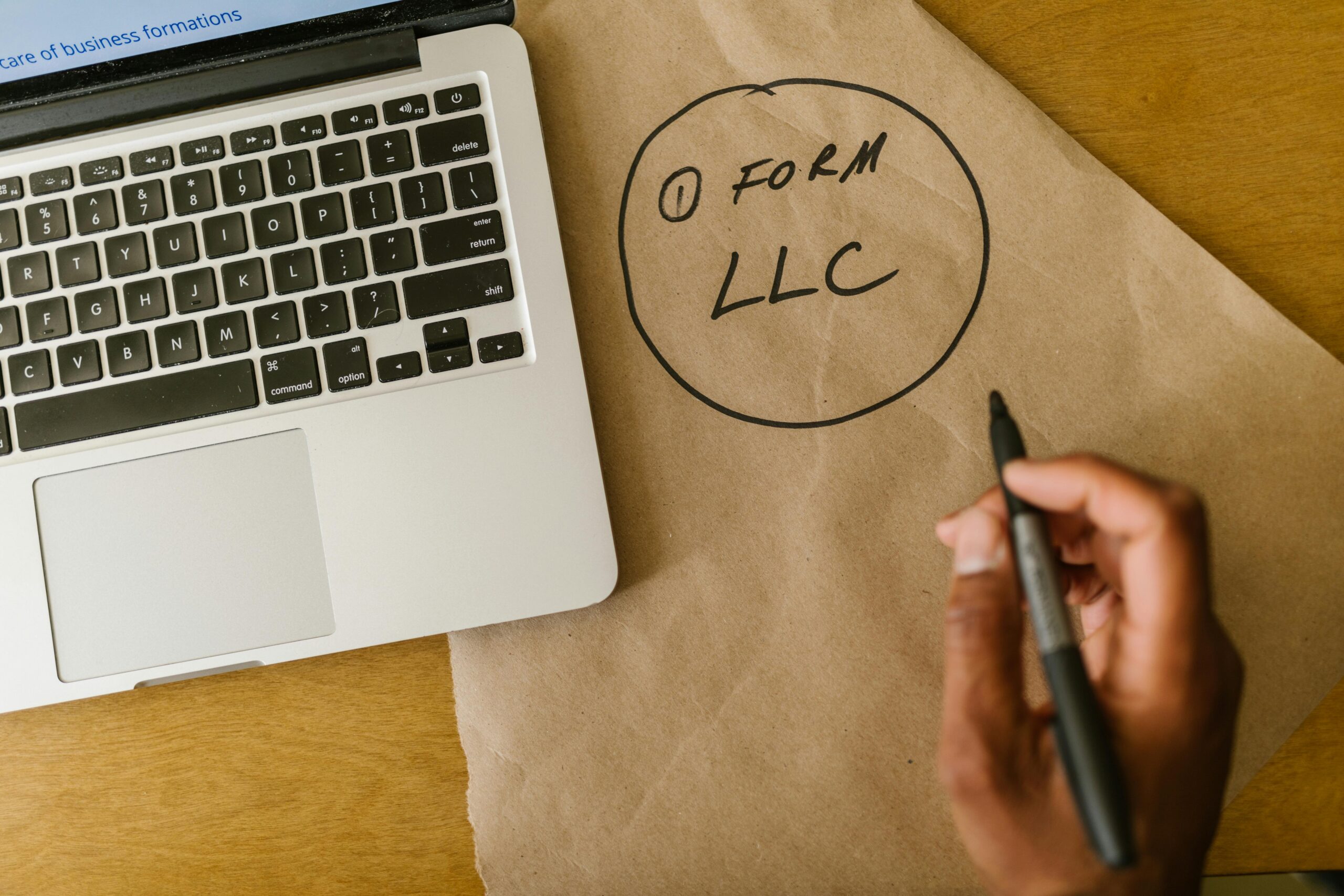
What is an LLC?
A Limited Liability Company, or LLC, is a type of business structure in the United States that combines the benefits of a corporation and a sole proprietorship or partnership. It’s designed to make starting and running a business easier while also protecting the personal assets of the business owner(s). Think of it as creating a separate “legal person” for your business, which can have its own bank accounts, debts, and responsibilities.
Step 1: Choose a Unique Name for Your LLC
- Your LLC’s name must comply with state naming requirements. It should be distinguishable from other registered businesses and include terms like “LLC” or “Limited Liability Company.”
- Conduct a name search in your state’s business registry to ensure availability.
- Consider registering your business name as a trademark for additional protection.
Step 2: Designate a Registered Agent
- Ensure the registered agent’s address is a physical location (not a P.O. box).
- A registered agent is responsible for receiving legal documents and official correspondence on behalf of your LLC.
- The agent can be yourself, an individual or a company authorized to operate in your state.
Step 3: File Articles of Organization
- Pay the state filing fee, which varies by jurisdiction, typically ranging from $50 to $500.
- Submit the Articles of Organization (or Certificate of Formation) to the appropriate state agency, typically the Secretary of State.
- Include key details such as your LLC’s name, registered agent’s information, and business address.
Step 4: Create an Operating Agreement
- Include details on profit sharing, voting rights, and member responsibilities.
- Though not always mandatory, an Operating Agreement outlines the ownership structure, roles, and operational procedures of your LLC.
- It helps prevent disputes among members and provides clarity on decision-making processes.
Step 5: Obtain an Employer Identification Number (EIN)
- Sole-member LLCs without employees may use the owner’s Social Security Number instead, but an EIN is recommended.
- Apply for an EIN through the IRS, either online or by mail.
- An EIN is required for opening a business bank account, hiring employees, and filing taxes.
Step 6: Fulfill State and Local Requirements
- Register for applicable state taxes, such as sales tax or franchise tax.
- Research state-specific licensing, permits, and zoning regulations applicable to your industry.
- Depending on your state, you may need to publish a notice of LLC formation in a local newspaper.
Step 7: Open a Business Bank Account
- Consider applying for a business credit card to manage expenses efficiently.
- Separate your personal and business finances by opening a dedicated business bank account.
- Provide your EIN, Articles of Organization, and Operating Agreement when setting up the account.
Step 8: Maintain Compliance
- Stay compliant with tax filings, renew licenses, and meet ongoing legal obligations.
- File annual or biennial reports as required by your state.
- Keep your registered agent’s information and business records up to date.
Step 9: Consider Professional Assistance
- Additionally, they can provide guidance on ongoing legal and financial matters, helping your business thrive long after formation.
- Forming an LLC can be a complex process, especially when dealing with unique state regulations or industry-specific requirements. Hiring a business attorney or a formation service can simplify the process.
- Professionals can ensure that all paperwork is correctly completed, deadlines are met, and your LLC is fully compliant with state and federal laws.
Benefits of Forming an LLC
- Limited Liability Protection: Safeguards personal assets from business liabilities.
- Tax Flexibility: Offers options for pass-through taxation or corporate tax status.
- Operational Simplicity: Fewer formalities compared to corporations.
- Credibility: Enhances your business’s professional image.
By following these general steps, you can establish a solid foundation for your LLC, ensuring legal compliance and operational success.
- How to form an LLC
- LLC formation guide
- Limited Liability Company setup
- Steps to create an LLC
- LLC requirements in all states
- Filing articles of organization
- Obtain EIN for LLC
- State-specific LLC process
- Operating Agreement for LLC
- Business asset protection
- Tax benefits of LLC
- Starting an LLC
- LLC compliance requirements
- Small business structure tips
- Entrepreneurial legal advice